Medical Aesthetics10 min read

Microneedling First Session: Cost, Risks & Aftercare 2026

First microneedling session runs $250-$650 in 2026 with 3-7 days of redness. See depth settings, real risks, who should skip, and the FDA-cleared devices.
Lena Ashford, Senior Aesthetics Editor·Published ·Last reviewed ·Reviewed by Dr. Priya Ramanathan, MD, MD, FAAD — Board-Certified Dermatologist (NPI verified)·How we vet
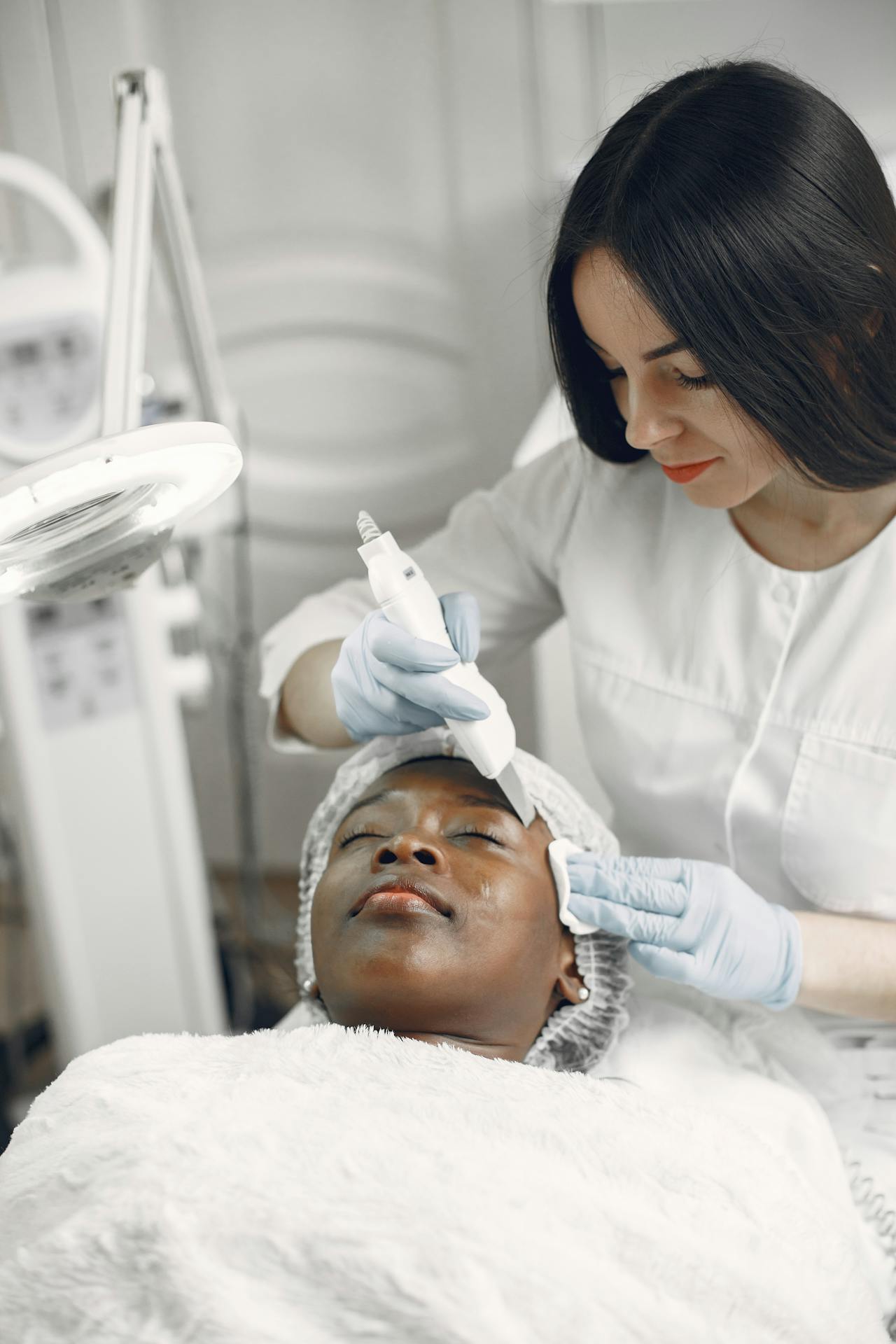
Board-certified registered nurse performing a first microneedling session with an FDA-cleared SkinPen device on a client at a US medspa

Medically reviewed by Dr. Lena Ashford, MD — Senior Aesthetics Editor — May 2026


This article is for informational purposes only and is not medical advice. Microneedling is a medical procedure with real risks. Consult a board-certified dermatologist or aesthetic-medicine physician before booking, especially if you have a history of keloid scarring, autoimmune disease, or active skin infection.


What is microneedling and what does a first session cost?


Microneedling — also called collagen induction therapy (CIT) or percutaneous collagen induction (PCI) — uses a sterile, FDA-cleared device to create controlled micro-injuries in the dermis. The micro-channels trigger the body's wound-healing cascade, which deposits new collagen and elastin over the following 4-6 weeks. The procedure is performed at depths of 0.25 mm (superficial, for product penetration) up to 2.5 mm (deep, for scar revision and stretch marks).


A first microneedling session at a US medspa costs $250-$650 in 2026, with the median sitting at $385 for a 60-minute face-only treatment. PRP (platelet-rich plasma, sometimes called the "vampire facial") and PRF (platelet-rich fibrin) add-ons cost an additional $200-$600 per session. Across Zoca's MedSpa Directory network of 850+ medical aesthetic providers in 75 US cities, microneedling is the third-most-booked treatment after Botox and lip filler.


This guide covers what a first session actually involves, real risks, who should skip the procedure, and what aftercare protocol the American Academy of Dermatology and American Society of Plastic Surgeons recommend. Microneedling is widely safe in the right hands but carries real complications when performed by untrained providers or with non-FDA-cleared devices.


Pricing snapshot: microneedling at US medspas in 2026


Service TierSingle Session3-Pack Bundle6-Pack SeriesBest For
Face only — basic$250-$425$700-$1,150$1,300-$2,200Texture, fine lines
Face + neck$350-$575$950-$1,550$1,800-$2,950Anti-aging, sun damage
Face + PRP / PRF$450-$1,150$1,250-$3,000$2,400-$5,400Acne scars, hair thinning
RF microneedling (Morpheus8, Vivace, Genius)$650-$1,800$1,800-$4,500$3,500-$8,500Deep wrinkles, skin laxity
Stretch marks / scars (off-face)$425-$850$1,150-$2,250$2,200-$4,200Targeted scar revision


For pairing with related medspa treatments, see our Botox vs Daxxify cost comparison, tear trough filler safety guide, and Sofwave vs Ultherapy 2026 comparison.


What does a first microneedling session look like?


Step-by-step


  • Consultation and medical history (10-15 min). The provider reviews medications, autoimmune conditions, history of keloid scarring, recent isotretinoin use, active skin infections, herpes simplex history, and pregnancy status. The American Society for Dermatologic Surgery flags 14 conditions that contraindicate or modify microneedling.
  • Photo documentation (5 min). Standardized before-photos under fixed lighting.
  • Topical numbing (20-30 min). 4% lidocaine cream is applied for at least 20 minutes. Some providers add a 30-minute numbing window for the deeper 1.5-2.5 mm settings.
  • Cleanse and prep (5 min). Numbing cream is removed; skin is cleansed with chlorhexidine or alcohol-based antiseptic.
  • Microneedling pass (20-35 min). The provider performs 2-4 passes at varied depths. Face-only takes 20-25 minutes; face + neck adds 10-15 minutes.
  • Optional PRP / PRF application (15-20 min). Blood is drawn (10-15 mL), centrifuged, and the platelet-rich layer is microneedled into the freshly created channels.
  • Post-treatment serum and SPF (5-10 min). Hyaluronic acid and growth factor serums absorb 10-50 times more efficiently into the open channels.

  • Total appointment time


    75-120 minutes for a first session including numbing wait. Follow-up sessions run 60-90 minutes once your provider knows your skin response and numbing tolerance.


    What you'll feel and look like after


    Immediately after


    Skin appears bright pink-to-red, similar to a moderate sunburn. Mild stinging or warmth for 60-120 minutes. About 35% of clients report tightness or a slight tingling for 4-8 hours.


    Day 1-3


    Redness fades to a pink flush. Skin may feel tight and look slightly rough or grainy as the micro-channels close. No active scabbing should occur — that signals over-treatment.


    Day 3-7


    Mild peeling or flaking in 40-60% of clients, especially on the cheeks and jaw line. Apply a gentle, occlusive moisturizer 3-5 times daily.


    Week 2-6


    New collagen formation begins around day 14 and peaks at week 4-6. Visible texture improvement, brightness, and pore-size reduction become measurable around week 4 of the first session, with cumulative gains over a 3-6 session series.


    Real risks and complications


    Common (5-15% of sessions)


  • Prolonged redness past 7 days.
  • Mild flaking or peeling.
  • Temporary acne flare in the week following treatment.
  • Bruising at deeper depths or with PRP draw site.

  • Uncommon (1-5% of sessions)


  • Post-inflammatory hyperpigmentation (PIH), more common in Fitzpatrick IV-VI skin types — the AAD recommends pre-treatment with topical hydroquinone or tranexamic acid for these patients.
  • Bacterial infection if aftercare is poor or the device is not properly sterilized.
  • Cold sore or herpes simplex flare in clients with HSV history — antiviral prophylaxis (valacyclovir 500 mg twice daily for 5-7 days starting the day before) is standard.
  • Tram-track scarring from improper technique on under-trained providers.

  • Rare but serious (under 1%)


  • Granulomatous reaction to topical products applied during the procedure (the FDA issued a warning in 2018 against using topical products not formulated for open-wound application).
  • Mycobacterial infection from non-sterile devices — multiple FDA-reported cases of Mycobacterium chelonae infection from improperly cleaned needle cartridges.
  • Permanent scarring from over-treatment (depth too deep for the skin location, or too many overlapping passes).

  • Who should skip or postpone microneedling?


  • Active acne, especially cystic — increases infection risk and PIH.
  • Keloid or hypertrophic scar history — high risk of triggering new keloid formation.
  • Active herpes simplex flare — can spread to micro-channel sites.
  • Recent isotretinoin (Accutane) within 6 months — skin is too thin and barrier-compromised.
  • Active autoimmune flare — lupus, scleroderma, or psoriasis.
  • Pregnancy and nursing — not enough safety data; the AAD does not recommend.
  • Active skin cancer at the treatment site.
  • Use of blood thinners (warfarin, eliquis) without physician clearance.
  • Bleeding disorders like hemophilia.
  • Open wounds, eczema flares, or active rosacea.

  • What FDA-cleared devices should the medspa be using?


    DeviceFDA ClearanceDepth RangeUsed For
    SkinPen Precision (Bellus Medical / Crown Aesthetics)510(k) cleared0.25-2.5 mmMost-cleared device for facial scars
    Eclipse MicroPen Elite510(k) cleared0.25-2.5 mmAnti-aging, scars
    Dr. Pen UltimaLimited clearance0.25-2.5 mmLower-tier; verify model number
    Morpheus8 (RF microneedling)510(k) cleared0.5-4 mm + RF energySkin laxity, deep wrinkles
    Vivace (RF microneedling)510(k) cleared0.2-3.5 mm + RFTightening, fine lines
    Genius RF (Lutronic)510(k) cleared0.5-3.5 mm + RFAcne scars, laxity

    Non-FDA-cleared devices and dermarollers (the rolling-pin-style home tools) are not equivalent and should not be used for clinical microneedling. The American Society for Dermatologic Surgery has issued multiple warnings about counterfeit and non-cleared devices imported through unofficial channels.


    Aftercare protocol (first 7 days)


    Day 0-1


  • No washing the face for 4-6 hours.
  • Gentle cleanser only (CeraVe Hydrating, Cetaphil) starting day 1.
  • No makeup for 24 hours.
  • No retinoids, glycolic acid, salicylic acid, vitamin C, or actives for 7 days.
  • SPF 30+ mineral sunscreen mandatory daily.

  • Day 2-3


  • Continue gentle cleanser and occlusive moisturizer.
  • Avoid sweating heavily; no gym, hot yoga, or sauna for 48 hours.
  • No swimming pools, hot tubs, or saltwater for 72 hours.

  • Day 4-7


  • Resume regular non-active skincare.
  • Avoid direct sun exposure when possible; SPF 50+ if outdoors.
  • Add mild hydration serums (hyaluronic acid) but skip retinoids and acids until day 7-10.

  • Week 2 onward


  • Resume full skincare routine.
  • Schedule next session at 4-6 weeks.
  • Document progress with consistent lighting photos.

  • How to find a credentialed microneedling provider


  • The provider must hold an active state RN, NP, PA, MD, or DO license. Estheticians can perform 0.25-0.5 mm "superficial" microneedling in some states, but anything deeper requires medical credentials.
  • The provider should hold board certification or specialty training: ABMS-recognized specialty for MDs (dermatology, plastic surgery), AANP for nurse practitioners, or AAPA for physician assistants.
  • The medspa must operate under a medical director (typically MD or DO) of record.
  • The device must be FDA-cleared and identifiable by manufacturer name and model.
  • Aftercare instructions must be in writing and include explicit infection-warning signs.
  • The medspa should disclose its sterilization protocol — disposable single-use cartridges are mandatory for safe practice.

  • About 78% of MedSpa Directory network providers hold RN, NP, PA, or MD credentials with specialty training. Browse top-rated medspas in California and Florida, and compare with our GLP-1 patient guide and lip filler dos and don'ts for related treatment planning.


    Final thoughts


    A first microneedling session at $250-$650 is a meaningful financial and recovery commitment. Done correctly with an FDA-cleared device by a credentialed RN, NP, PA, or MD, results are reliable: visible texture improvement at week 4-6, with cumulative gains over a 3-6 session series. Done incorrectly — by under-trained providers, with non-cleared devices, or without proper aftercare — the procedure carries real risks of scarring, hyperpigmentation, and infection. Always verify FDA clearance of the device, the provider's medical credentials, and the medspa's sterilization protocol before booking. MedSpa Directory's network tags providers by license level and device certification across 75 US cities so you can choose with full clinical confidence.


    You Might Also Be Interested In


    Your wellness journey does not stop at medical spa treatments. Check out these related guides:


  • Facial Finders — Discover facials and skincare professionals near you. Compare options and visit their websites for pricing.

  • Looking for massage therapy? Massage Near Me Guide helps you find a massage therapist near you with honest reviews and direct booking links.

  • The New York Facial — Your go-to directory for the best spas, facials, and beauty services in New York City. Find providers, read guides, and book online.
  • Sources & references

    microneedlingcollagen induction therapyfirst medspa sessionskinpenmorpheus8medspa cost 2026nationwide

    Frequently asked questions

    How much does a first microneedling session cost in 2026?
    A first microneedling session costs $250-$650 in the US in 2026, with the median around $385 for a face-only 60-minute treatment. Face plus neck runs $350-$575. PRP or PRF add-ons cost an additional $200-$600. Three-session bundles run $700-$1,550 and six-session series $1,300-$2,950.
    How many microneedling sessions do I need?
    Most clients see best results from a series of 3-6 sessions spaced 4-6 weeks apart. New collagen formation peaks at week 4-6 after each session, so spacing closer than 4 weeks does not improve results. Maintenance every 3-6 months preserves gains. About 64% of network clients book 4-6 session series initially.
    Is microneedling safe?
    Microneedling is widely safe when performed with an FDA-cleared device by a credentialed RN, NP, PA, or MD. Common side effects (5-15% of sessions): redness past 7 days, mild flaking, temporary acne flare. Uncommon risks (1-5%): infection, hyperpigmentation, herpes flare. Rare but serious (under 1%): granulomatous reaction, mycobacterial infection, scarring. Always verify FDA-cleared device and provider credentials.
    What is the recovery time for microneedling?
    Most clients return to normal activities within 24-48 hours. Visible pinkness fades over 3-7 days; mild flaking can occur day 3-7. Avoid sweating, swimming, hot tubs, saunas, retinoids, and active acids for 7 days post-procedure. SPF 30+ mineral sunscreen daily for at least 2 weeks. Full collagen results visible at week 4-6.
    Who should not get microneedling?
    Skip if you have active acne (especially cystic), keloid scar history, active herpes simplex flare, recent isotretinoin within 6 months, active autoimmune flare, pregnancy or nursing, active skin cancer at treatment site, or are on blood thinners without physician clearance. The American Society for Dermatologic Surgery flags 14 contraindicating conditions — disclose all medical history at intake.
    What's the difference between microneedling and RF microneedling?
    Standard microneedling uses needles only (0.25-2.5 mm depth) for collagen induction. RF (radiofrequency) microneedling adds heat energy delivered through the needle tips for deeper tissue tightening. RF devices like Morpheus8, Vivace, and Genius cost $650-$1,800 per session vs $250-$650 for standard. RF is preferred for skin laxity and deep wrinkles; standard works for texture and fine lines.
    Is microneedling safe during pregnancy?
    No. The AAD does not recommend microneedling during pregnancy or nursing due to insufficient safety data on the procedure itself, the topical numbing agents, and any growth-factor serums applied. Postpone until at least 6-8 weeks after the end of nursing. Pregnant clients seeking texture improvement can pursue gentler in-office treatments like enzyme facials.
    Can microneedling cause hyperpigmentation?
    Yes — post-inflammatory hyperpigmentation (PIH) occurs in 1-5% of sessions, more frequently in Fitzpatrick IV-VI skin types. The American Academy of Dermatology recommends pre-treatment with topical hydroquinone, tranexamic acid, or kojic acid for 4-6 weeks before microneedling in higher-risk patients. Strict SPF 50+ for 4-6 weeks post-treatment is mandatory.
    How do I find an FDA-cleared microneedling device?
    Top FDA 510(k) cleared devices: SkinPen Precision, Eclipse MicroPen Elite, Morpheus8 (RF), Vivace (RF), and Genius RF. Ask the medspa to confirm device manufacturer name and model. Disposable single-use needle cartridges are mandatory for safe practice — multi-use cartridges have been linked to *Mycobacterium chelonae* infection in FDA-reported cases.
    What credentials should my microneedling provider hold?
    Active RN, NP, PA, MD, or DO license is mandatory in most states for needle depths over 0.5 mm. Look for board certification: ABMS-recognized for MDs (dermatology, plastic surgery), AANP for nurse practitioners, or AAPA for physician assistants. The medspa must operate under a medical director (MD or DO) of record. About 78% of MedSpa Directory network providers hold the right medical credentials.

    Need a provider in Nationwide?

    Browse our directory and book directly with local businesses.

    Browse the directory

    Related articles